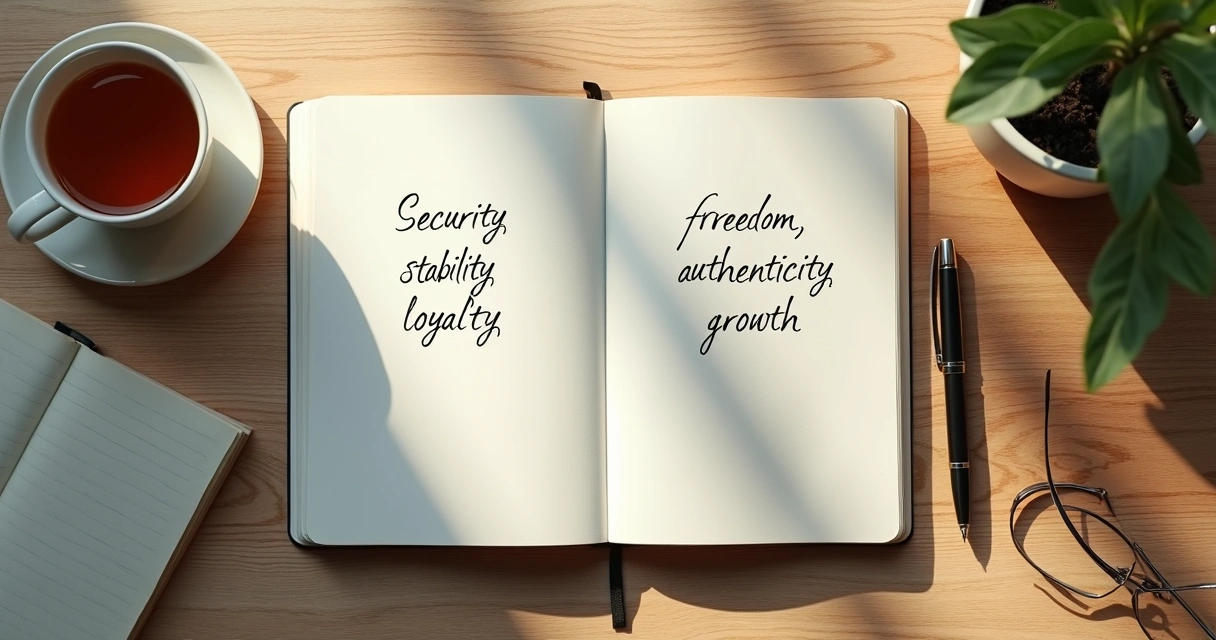


We all say we want to do the right thing. Then real life happens. A rushed morning, a tense meeting, a family conflict, a tempting shortcut. In those moments, ethics stop being abstract and become personal.
That is where personal values mapping helps. It gives us a clear view of what we stand for, what we refuse, and how we want to act when pressure rises.
Personal values mapping is the practice of naming, sorting, and applying our core values to real choices.
In our experience, many people think they know their values until two good things clash. Honesty may clash with loyalty. Ambition may clash with balance. Peace may clash with justice. The problem is not lack of intention. The problem is lack of structure.
When we map our values, we do not create a perfect self. We create a more coherent one.
Why values need a map
A value sounds simple when it stands alone. Words like respect, freedom, care, truth, and fairness feel clear. Yet daily life does not present one clean option at a time. It gives us mixed motives, blurred lines, and consequences that unfold slowly.
We once spoke with a person who said, "I value family above all." But they also valued honesty and health. They kept saying yes to every family demand, even when it required lying for someone or neglecting their own limits. The value was real. The map was missing.
Clarity changes conduct.
A values map helps us see three things:
Which values are truly central to us.
Which values are only aspirational words.
How to act when values pull in different directions.
Without this, we may mistake impulse for integrity. We may call comfort a principle. We may justify habits that do not match the person we claim to be.
What a personal values map includes
A useful map is not a decorative list. It is a working tool. We think it should be practical enough to guide a hard conversation, a purchase, a promise, or a boundary.
Most values maps include a few layers:
Core values, which we are not willing to trade for convenience.
Support values, which help express our core values in action.
Conflict points, where two values may collide.
Behavior markers, which show what each value looks like in daily life.
For example, if we say we value respect, what does that mean at home, at work, online, and under stress? Do we listen without interrupting? Do we keep private matters private? Do we avoid speaking with contempt when angry?
A value becomes real when we can observe its behavior.
That is why vague language does not help much. A map must translate ideals into acts.
How to build your map
We suggest starting slowly. People often rush to choose values that sound admirable. That usually leads to a borrowed identity, not a true one.
Instead, begin with memory. Think of moments that left a mark on you, both good and painful. Ask what was present in the good moments, and what was violated in the painful ones.
A simple process can help:
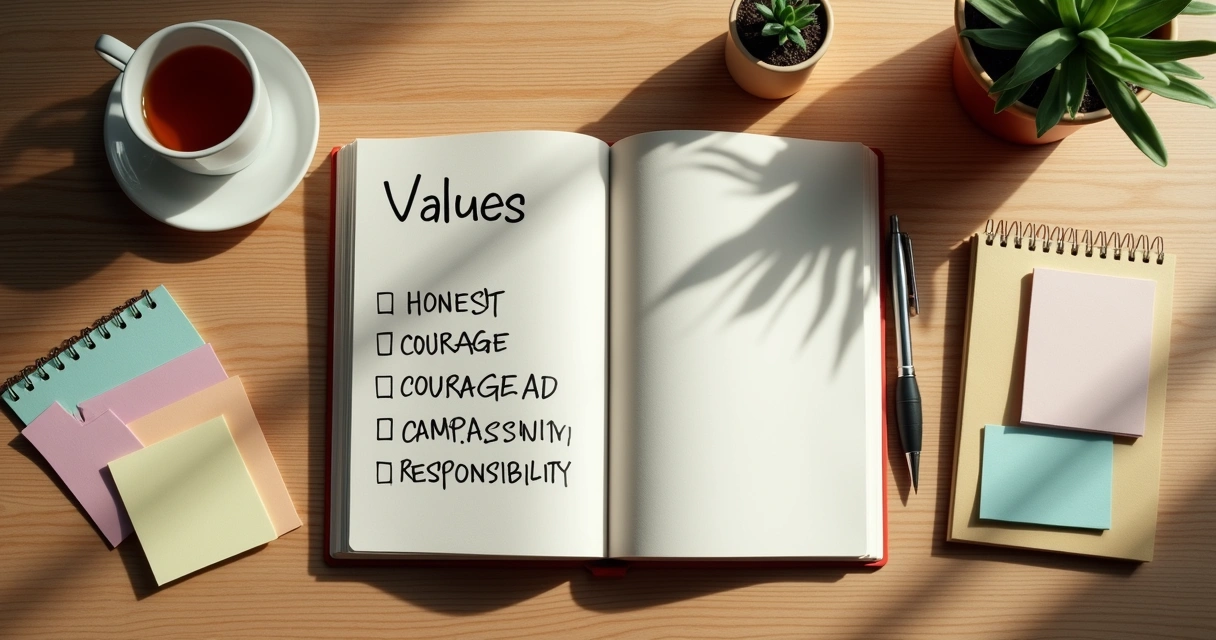
Write down 10 to 15 values that feel personally meaningful.
Group similar values, such as honesty and truthfulness, or care and kindness.
Reduce the list to five core values.
Define each one in your own words.
Add two daily behaviors for each value.
Note one common situation where each value is tested.
This step matters because our words can hide confusion. "Freedom" may mean spontaneity to one person and responsibility to another. "Love" may mean service, honesty, or protection. If we do not define our terms, our map stays foggy.
The best values map uses our own language, not borrowed slogans.
We also benefit from asking one hard question for each value: what cost am I willing to accept to live this? If a value has no cost, it may only be a preference.
Using the map in daily choices
Once the map exists, it should meet ordinary life. Not only large moral dilemmas. Small choices shape character faster than rare dramatic moments.
We can use the map in questions like these:
Should we stay silent or speak up?
Should we accept a benefit that feels unfair?
Should we keep a promise that now feels inconvenient?
Should we set a limit even if someone dislikes it?
One helpful method is to pause and test the choice through three filters:
Does this action match my top values?
Who may be affected by this choice?
Can I accept the consequence without hiding from it?
That pause can feel uncomfortable. Good. It means conscience is active. We have seen that many ethical failures begin not in cruelty, but in speed. People move too fast to notice they are crossing their own line.
Sometimes the right choice is not the easiest one. Sometimes it costs approval, money, or convenience. Still, a person who acts in line with clear values tends to feel less inner division.
Peace grows from alignment.
What gets in the way
Values mapping sounds clean on paper, but real obstacles appear quickly. We should name them plainly.
Common barriers include:
People-pleasing, which makes approval feel more urgent than principle.
Fear of conflict, which can disguise avoidance as kindness.
Emotional fatigue, which weakens judgment and patience.
Role confusion, when we act from pressure rather than conviction.
We have also noticed a subtle barrier: self-image. Many of us want to see ourselves as good, wise, or fair. That desire can block honest review. If we only protect our image, we will not correct our conduct.
So values mapping must include revision. We should return to the map after conflicts, regrets, and difficult decisions. Not to punish ourselves, but to learn where our stated values and lived values still differ.
Making the map sustainable
A values map should live where life happens. Some people keep it in a journal. Others write a short version on their phone. What matters is access and repetition.
We think a short weekly check-in works well. Ask:
Where did I act in line with my values this week?
Where did I drift?
What pattern keeps repeating?
What one adjustment will I make next week?
This is not about perfection. It is about training moral attention. Ethical living is built in repeated acts, spoken words, restrained impulses, and honest repair.

Conclusion
Personal values mapping helps us turn good intentions into stable conduct. It gives shape to conscience. It helps us decide with more honesty when life is messy, fast, or emotionally charged.
We do not become ethical by liking ethical words. We become ethical by choosing in line with tested values, again and again. A map will not remove struggle, but it can reduce confusion. And that alone changes a great deal.
If we want daily decisions to reflect who we say we are, then we need more than desire. We need direction.
Frequently asked questions
What is personal values mapping?
Personal values mapping is the process of identifying our main values, ranking them, defining what they mean to us, and linking them to daily behaviors. It helps us make choices with more consistency and ethical awareness.
How to create a personal values map?
We can create a personal values map by listing meaningful values, narrowing them to a few core ones, defining each in plain language, and adding real behaviors that express them. It also helps to identify situations where those values are often tested.
Why is mapping values important?
Mapping values matters because it reduces inner confusion. It shows us what truly guides us, where our actions do not match our beliefs, and how to respond when two values clash in the same situation.
Can values mapping improve daily decisions?
Yes. Values mapping can improve daily decisions by giving us a clear reference before we act. It slows impulsive choices, strengthens accountability, and helps us respond in ways that fit our principles.
What are common examples of personal values?
Common examples of personal values include honesty, respect, responsibility, compassion, loyalty, fairness, courage, freedom, patience, and integrity. The best set is the one that truly reflects how we want to live and relate to others.