


Evening routines often get reduced to skin care, herbal tea, or turning off a screen. We think that misses the deeper point. The last part of the day can become a small space for inner order. Not a performance. Not a strict ritual. Just a steady way to notice what we lived, how we reacted, and what deserves a better response tomorrow.
A reflective evening routine is a simple practice that helps us close the day with awareness instead of mental noise.
Many of us know the feeling of reaching bedtime with a full head and no real sense of completion. We moved through tasks, messages, worries, and small emotional shocks, but never paused long enough to understand them. Then the body lies down, while the mind keeps moving. That is where a reflective routine helps. It gives the day an ending.
There is also a practical side to this. News coverage of research on evening recovery activities and next-morning mood and alertness points in the same direction many of us feel in daily life. The way we end the day affects the way we begin the next one.
Why reflection works at night
Night changes our pace. The outer demands start to drop. That makes it easier to hear what was ignored during the day. We may notice tension from a conversation. We may see that a good result still left an uneasy feeling. We may admit that we were right in facts, but poor in tone.
Reflection is not about judging every step. It is about seeing clearly enough to learn. In our experience, this works best when the routine is short, honest, and repeated often.
Small pauses change long patterns.
When we reflect at night, we train a different kind of attention. We stop asking only, “What did I do?” and start asking, “What did that do to me, and what did I do to others?” That question can change how we live.
What a reflective evening routine should include
A useful routine does not need many parts. In fact, too many parts usually make it fragile. We suggest building it with a few clear elements that support calm, memory, and truthfulness.
You can shape your routine around these four parts:
- A transition out of activity
- A short emotional check-in
- A written or spoken reflection
- A simple closing intention for the next day
The best evening routine is one you can repeat even on ordinary, imperfect nights.
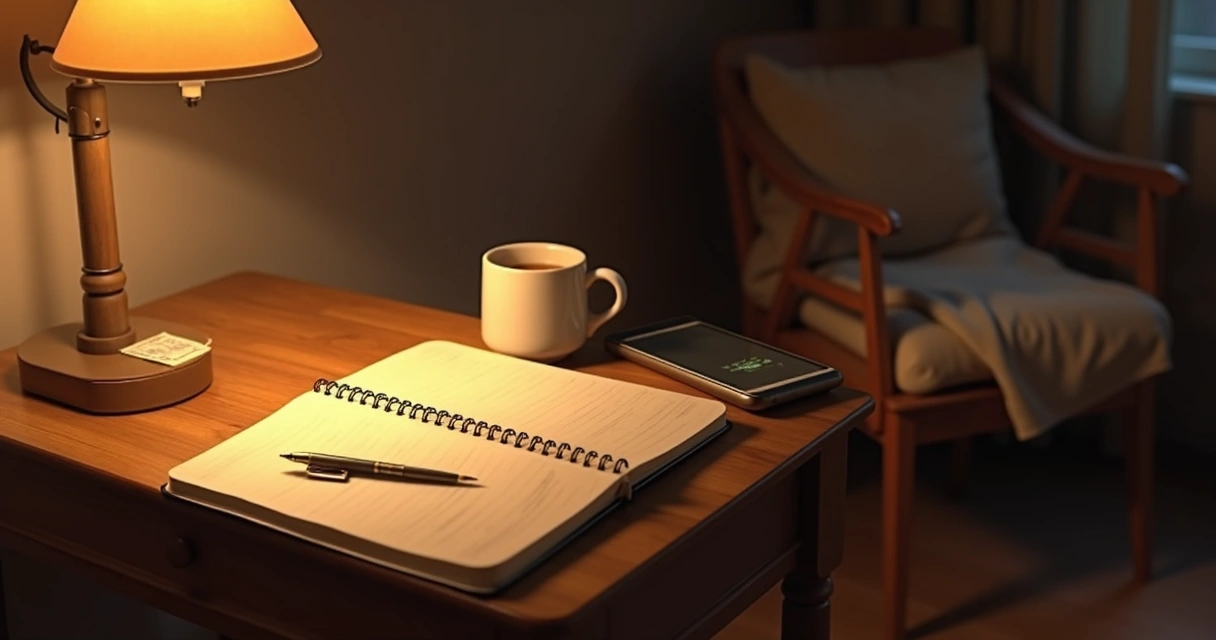
One person may sit by a dim lamp with a notebook. Another may wash dishes slowly, then write three lines before sleep. We have seen both work well. The form matters less than the quality of attention.
How to build the routine step by step
The easiest way to make this real is to keep the order simple. A sequence helps the mind settle. We recommend starting with a routine that lasts 10 to 20 minutes.
Here is a structure we find effective:
- Choose a fixed time. It does not need to be exact, but it should happen near the same point each night.
- Reduce stimulation for a few minutes. Lower lights, step away from messages, and stop new input.
- Notice your state. Ask what you are carrying in the body, mood, and thoughts.
- Write briefly. Record what stood out, what felt unresolved, and what you learned.
- End with one intention. Keep it concrete and realistic for tomorrow.
Let us make that more human. One evening, we may sit down convinced that nothing much happened. Then we write one line: “I was impatient in a meeting and still feel it.” Suddenly the day becomes readable. That is the value of the practice. It catches what would have passed unnoticed.
Reflection becomes useful when it turns experience into a clearer next step.
Questions that lead to honest reflection
Not every question opens real insight. Some only invite vague self-criticism. Better questions are grounded in lived moments. They help us observe without hiding and without exaggerating.
We suggest rotating prompts like these:
- What stayed with me from today?
- Where did I feel most at ease?
- When did I react faster than I understood?
- What did I avoid saying or feeling?
- What choice today matched my values?
- What needs repair, rest, or follow-up tomorrow?
You do not need to answer all of them each night. In fact, one good question is often enough. The aim is not volume. It is contact with what is true.
Common mistakes that make the routine fail
Many routines break not because reflection is hard, but because the setup is unrealistic. We have seen people create beautiful plans they cannot hold for more than four days. Then they blame themselves, when the real issue was excess.
These are common errors:
- Starting with a 30-minute routine when five minutes would be more honest
- Turning reflection into self-punishment
- Writing only about tasks, never about emotions or relationships
- Waiting for the perfect mood instead of staying consistent
- Changing the method every few days
A reflective evening routine should feel steady, not heavy. Some nights will be deep. Others will be plain. Both count.

How to keep it going without forcing it
Consistency grows when the routine feels personal. We do better when we link it to a real need, such as sleeping with less agitation, understanding our reactions, or ending the day with more coherence. If the practice has meaning, repetition becomes lighter.
It also helps to lower the standard. A full page is not better than three honest lines. Some evenings, our reflection may be no more than this: “I felt scattered. I need to slow down before hard conversations.” That can be enough.
Clarity often arrives in short sentences.
If you miss a night, return the next one. No drama. A reflective routine is not built by perfection. It is built by return.
Conclusion
A reflective evening routine gives the day a shape that many of us are missing. It helps us move from reaction to understanding, from mental residue to a more settled state. We are not trying to control every thought before sleep. We are learning to meet our own experience with more honesty and direction.
When practiced with simplicity, this routine can support better rest, clearer choices, and more emotional steadiness over time. Start small. Stay sincere. Let the evening become a place where the day is not just finished, but understood.
Frequently asked questions
What is a reflective evening routine?
A reflective evening routine is a short set of calming actions that help us review the day with awareness. It often includes slowing down, checking our emotional state, and writing or thinking about what we learned, what felt unresolved, and what we want to carry into tomorrow.
How can I start a reflective routine?
We suggest starting very small. Pick a regular time at night, reduce stimulation for a few minutes, and answer one reflection question in a notebook. Keep the routine short, around 10 minutes, until it feels natural. Simple routines are easier to maintain.
What are the best reflection questions?
The best questions are clear and grounded in lived experience. Good examples are: What stayed with me today? When did I feel calm or tense? What did I avoid? What choice matched my values? What needs care tomorrow? Questions like these help us notice patterns without drifting into vague thinking.
Is it worth it to journal nightly?
Nightly journaling is worth it when it helps us process experience instead of storing it as tension.
It does not need to be long. A few honest lines can help us settle the mind, recognize patterns, and close the day with more clarity. Over time, journaling also creates a record of growth that we can revisit.
How much time should it take?
For most people, 10 to 20 minutes is enough. On busy nights, even five minutes can work if the attention is real. The goal is not length. It is to create a repeatable pause that helps us understand the day before sleep.