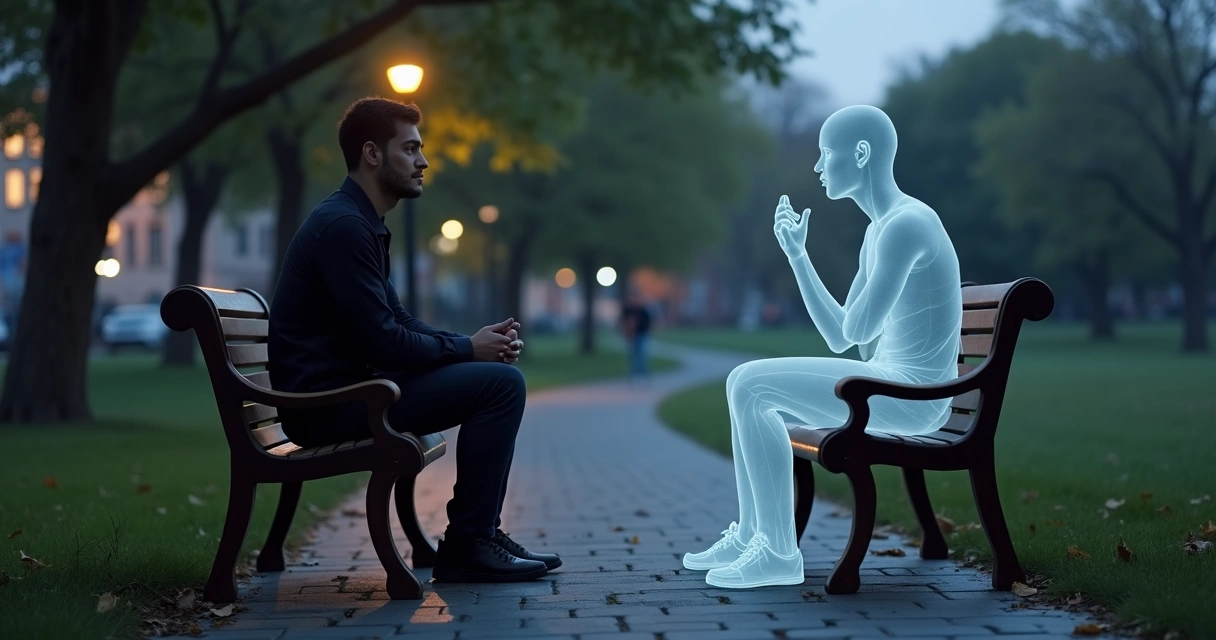

We like to think our feelings are direct, honest, and fully ours. Yet daily emotional reactions are often filtered through patterns we did not choose on purpose. These patterns are unconscious biases. They work in the background, fast and quiet, and they can shape how we judge people, how safe we feel, and even how much patience we have at 9 in the morning.
Unconscious bias is a hidden mental shortcut that influences emotion before clear thought has time to act.
A review from the National Center for Biotechnology Information describes implicit biases as subconscious associations that affect judgment and can lead to unequal treatment. A Georgetown University Library overview also explains that these attitudes shape understanding, actions, and decisions, often without awareness. This is not just a social issue outside of us. It lives inside daily moments.
We see it when someone’s tone bothers us more than it should. We feel it when a stranger seems “off” for no clear reason. We live it when a small delay, a look, or a text message triggers a reaction much larger than the event itself.
Bias often speaks before reason.
1. It decides who feels safe to us
Our nervous system makes quick calls about safety. Sometimes that protects us. Sometimes it confuses familiarity with truth. We may trust people who speak like us, dress like us, or share our habits. We may tense up around people who feel unfamiliar, even when they have done nothing wrong.
In our experience, this creates emotional reactions that seem natural but are often trained. Comfort is not always evidence. It can just be repetition.
That means we may feel warmth, caution, or distance before any real exchange has happened. Then the emotion feels justified, because the body already reacted.
2. It changes how we read neutral behavior
One person’s silence may seem calm. Another person’s silence may seem rude. Why? Bias fills in the gaps.
When information is incomplete, the mind does not stay empty for long. It guesses. It uses old categories, prior stories, and learned expectations. A short reply in a message can feel cold. A serious face in a meeting can feel hostile. Later we may find out the person was tired, distracted, or simply direct.
Bias turns neutral signals into emotional stories.
We have all had that moment. We think, “Something is wrong.” Hours later, nothing was wrong at all. The emotional response was real, but the interpretation was weak.

3. It amplifies threat in familiar patterns
Bias does not only shape social judgment. It also shapes emotional memory. If we were hurt, ignored, or shamed in certain situations before, the mind starts scanning for similar signs. A raised voice, a delayed answer, or a certain type of authority can trigger more fear or anger than the present moment deserves.
This is where many daily reactions become confusing. We are not only reacting to now. We are reacting to what now resembles.
- A brief correction may feel like rejection.
- A disagreement may feel like disrespect.
- A boundary may feel like abandonment.
These reactions are human. Still, they can trap us if we never question them.
4. It affects how much empathy we give
We do not offer the same emotional generosity to everyone. Bias can make us excuse one person and condemn another for the same behavior. It can make us see one person as “having a bad day” and another as “being difficult.”
This uneven empathy shapes our mood more than we admit. When we judge harshly, we often become irritated faster. When we assume badly, we close emotionally. In contrast, when we give context, our emotional state softens.
A Stanford Medicine article on unconscious bias notes that learned stereotypes influence behavior and can damage belonging, performance, and mental health. That same mechanism can quietly affect daily relationships too. When we reduce people to a category, emotional connection drops.
Less empathy, more reaction.
5. It shapes what we expect from ourselves
Not all unconscious bias points outward. Some of it turns inward and becomes self-judgment. We absorb ideas about who is “good,” “capable,” “calm,” “strong,” or “too emotional.” Then we measure ourselves against those hidden rules.
In our view, this is one of the most painful forms of bias because it can feel like identity. A person may feel shame for speaking up, guilt for resting, or anxiety for taking space. The trigger seems personal, but the standard may have been learned long ago.
Internalized bias can make ordinary emotions feel like personal failure.
That is why some reactions come with a second wound. First we feel sad, angry, or afraid. Then we judge ourselves for feeling it.
6. It changes how we handle conflict
Conflict is one of the fastest places for bias to take over. In a tense moment, we often stop seeing the full person in front of us. We see a role, a label, or an old pattern. That makes our emotional response narrower and harder.
We may assume intent too fast. We may hear attack where there was clumsy wording. We may dismiss a valid concern because it came from someone we already categorized in a fixed way.
In daily life, this can look like:
- Interrupting before the other person finishes.
- Defending ourselves before we understand the point.
- Treating feedback as insult.
- Holding onto resentment after small events.
Many arguments are fed less by facts and more by filtered perception. That does not mean the conflict is unreal. It means our reading of it may be partial.
7. It keeps emotional habits running on autopilot
Perhaps the deepest effect of unconscious bias is repetition. We react the same way, defend the same way, withdraw the same way, and call it personality. But often it is conditioning with a familiar face.
When we do not question our emotional habits, they start to feel permanent. We say, “That is just how I am.” Yet many repeated reactions are built on hidden assumptions about people, power, belonging, and worth.
Awareness does not erase bias overnight. Still, it changes the speed of the process. We notice the first spark. We pause. We ask better questions.
- What did I assume just now?
- What else could be true?
- Is my feeling about this moment, or an older pattern?
These questions do not deny emotion. They refine it.
Conclusion
Unconscious bias shapes daily emotional life by directing attention, assigning meaning, and pushing reactions before reflection begins. It affects trust, empathy, conflict, self-image, and the stories we attach to neutral events. We may not control the first impulse, but we can build awareness of what feeds it.
Emotional maturity begins when we stop treating every reaction as final truth.
When we learn to observe our own filters, we create more space between stimulus and response. In that space, there is choice. And choice changes everything.
Frequently asked questions
What is unconscious bias in emotions?
Unconscious bias in emotions is the hidden set of learned beliefs and associations that affects how we feel before we fully think. It can shape trust, fear, irritation, guilt, or comfort without our clear awareness.
How does bias affect daily feelings?
Bias affects daily feelings by changing how we interpret people, tone, behavior, and events. It can make neutral moments feel threatening, make us judge others too fast, or make us react with more intensity than the situation calls for.
Can I reduce my unconscious bias?
Yes. We can reduce unconscious bias by slowing down reactions, questioning first impressions, listening longer, and reflecting on repeated emotional patterns. The goal is not perfection. It is greater awareness and better choices over time.
What are common examples of emotional bias?
Common examples include assuming someone is rude because they are quiet, feeling unsafe around what is unfamiliar, judging one person more harshly than another for the same action, or feeling shame for emotions that were once treated as weakness.
How to spot unconscious bias in myself?
We can spot unconscious bias by noticing fast judgments, strong reactions with little evidence, repeated conflict patterns, and moments when we assume motive before asking questions. Journaling after emotional events can also help reveal hidden patterns.